
Behavioral Health is Essential to Recovery
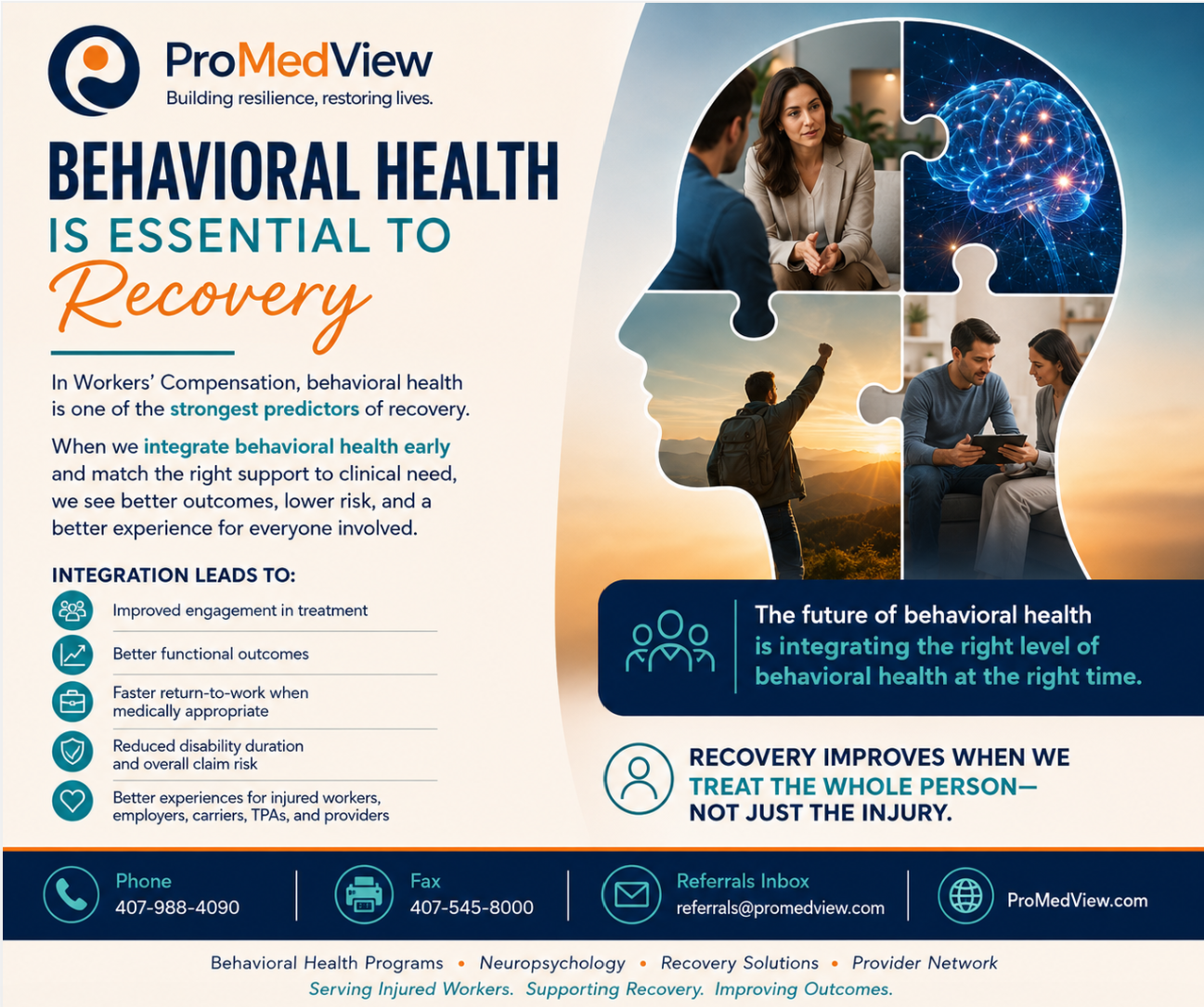
Behavioral health is no longer a secondary consideration in Workers' Compensation, it is one of the strongest predictors of recovery.
When an injured worker experiences anxiety, depression, trauma, fear avoidance, chronic pain, or catastrophic injury, these factors don't just affect emotional well-being. They influence pain perception, treatment adherence, physical rehabilitation, return-to-work outcomes, claim duration, and overall claim costs.
Yet behavioral health is still too often introduced only after recovery has stalled.
The better approach is early identification, thoughtful clinical triage, and matching each injured worker with the right level of behavioral health support at the right time.
Not every injured worker needs intensive psychotherapy. Some benefit from brief supportive counseling. Others require trauma-informed treatment, neuropsychological evaluation, psychiatric consultation, or coordinated interdisciplinary care. The key is understanding clinical acuity and providing the appropriate intervention before psychosocial barriers become chronic obstacles to recovery.
Successful Workers' Compensation programs recognize that behavioral health is not separate from medical care—it is part of medical care.
When we integrate behavioral health into the recovery pathway, we see:
• Improved engagement in treatment
• Better functional outcomes
• Faster return-to-work when medically appropriate
• Reduced disability duration
• Lower overall claim risk
• Better experiences for injured workers, employers, carriers, TPAs, and providers alike
The future of Workers' Compensation isn't simply adding behavioral health. It's integrating behavioral health into every stage of recovery.
Recovery improves when we treat the whole person, not just the injury.

#WorkersCompensation #BehavioralHealth #MentalHealth #ReturnToWork #ClaimsManagement #DisabilityManagement #OccupationalHealth #TraumaRecovery #CaseManagement #HealthcareInnovation