
The Cost of Waiting
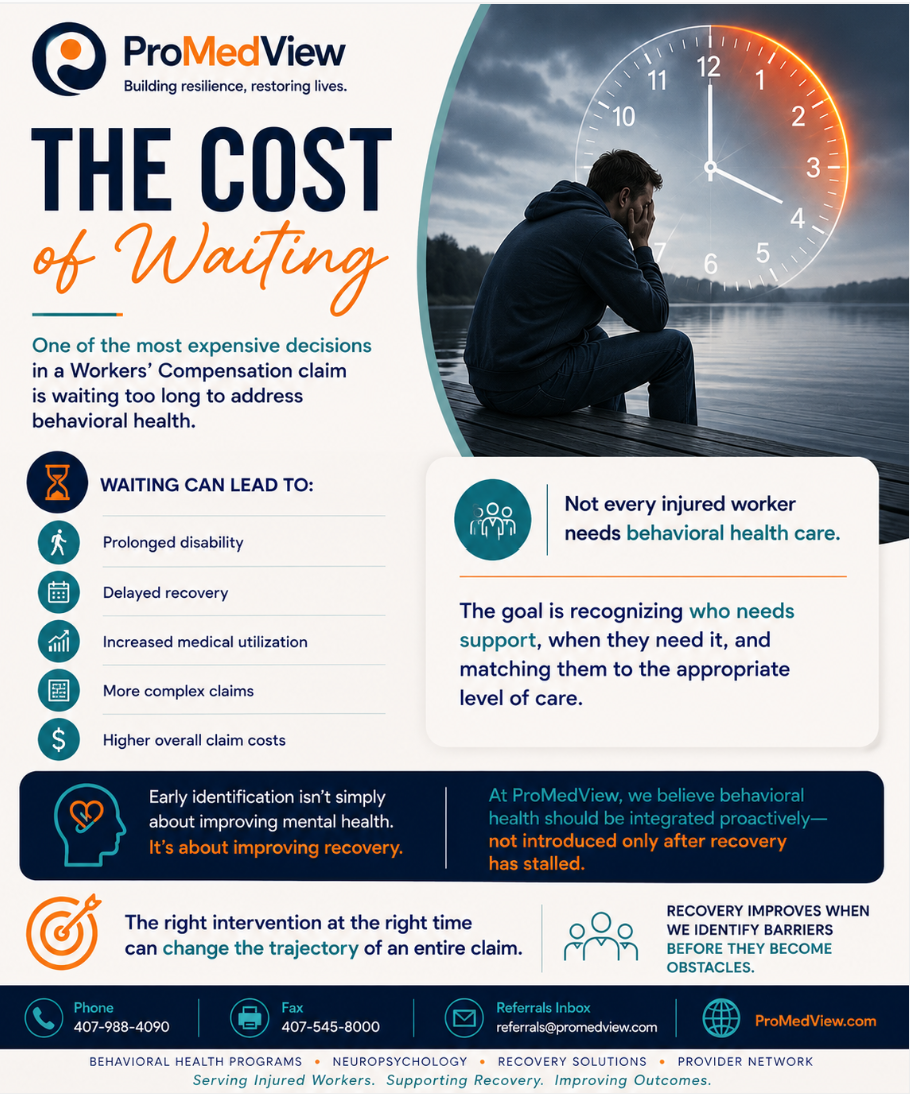
One of the most expensive decisions in a Workers' Compensation claim is waiting too long to address behavioral health.
Waiting can become an expensive decision in a Workers’ Compensation claim.
Behavioral health challenges rarely appear overnight.
More often, the first signs are subtle changes in how an injured worker thinks, sleeps, moves, participates in treatment, or views their ability to recover.
These early warning signs may include:
Fear of movement or reinjury
Anxiety about returning to work
Sleep disruption
Catastrophic thinking about pain or recovery
Withdrawal from usual sources of support
Reduced confidence in the ability to recover
Avoidance of activities associated with the injury
Increasing frustration, irritability, or emotional distress
Difficulty progressing despite appropriate medical treatment
Individually, these behaviors may seem like understandable responses to an injury. And often, they are.
The concern arises when they persist and begin interfering with rehabilitation, function, and recovery.
The Science Behind the Warning Signs
Recovery from an injury is not solely a physical process.
Pain, movement, sleep, stress, cognition, emotion, and expectations interact through the nervous system. This is why two people with seemingly similar physical injuries can follow very different recovery trajectories.
Research increasingly supports a biopsychosocial understanding of disability and recovery. Current occupational medicine guidance identifies factors such as low self-efficacy, expectations of not returning to work, fear of reinjury, psychosocial stressors, and psychiatric conditions among the factors that can increase the risk of work disability.
The 2025 American College of Occupational and Environmental Medicine Work Disability Prevention and Management Guideline similarly emphasizes an evidence-based approach to preventing and mitigating work disability rather than waiting until disability becomes prolonged.
Fear Can Change Behavior
After an injury, some apprehension about pain or movement is normal. But when movement becomes associated with danger, an injured worker may begin avoiding activity out of fear of pain or reinjury.
Avoidance can reduce opportunities to rebuild strength, tolerance, confidence, and normal movement patterns.
This is one reason occupational medicine emphasizes identifying obstacles to recovery and return to work early, including worries, beliefs, mental health conditions, and misconceptions about activity. ACOEM also notes the importance of appropriately resuming activity as part of physical and psychological recovery.
The objective is not to tell an injured worker that pain is psychological.
It is to recognize that the brain's interpretation of threat can influence behavior, and behavior can influence recovery.
Expectations Matter
What an injured worker believes about recovery may also provide important clinical information.
A systematic review and meta-analysis involving 30 studies and 28,741 people with musculoskeletal pain conditions found that individuals with low expectations for recovery had approximately twice the odds of work disability at follow-up compared with those with more favorable expectations.
That does not mean optimism cures an injury.
It means that statements such as:
"I don't think I'll ever be able to do my job again."
"I'm afraid I'll damage myself if I move that way."
or
"Nothing is going to make this better."
may represent more than frustration.
They can be clinically meaningful signals worth exploring.
Sleep Is Part of Recovery
Sleep disruption is another warning sign that can easily be overlooked after an injury.
Pain can interfere with sleep, while inadequate or disrupted sleep can affect pain processing, mood, cognition, stress regulation, and daytime function.
A 2024 systematic review and meta-analysis found evidence of a bidirectional relationship between sleep problems and chronic musculoskeletal pain: pain can interfere with sleep, and sleep problems can contribute to the persistence or worsening of pain.
This creates the potential for a reinforcing cycle:
Pain → disrupted sleep → greater physiological and emotional stress → altered pain experience and reduced function → further sleep disruption
Recognizing sleep problems therefore provides another opportunity to address a barrier to recovery rather than treating it as an unrelated complaint.
When Early Warning Signs Become Recovery Barriers
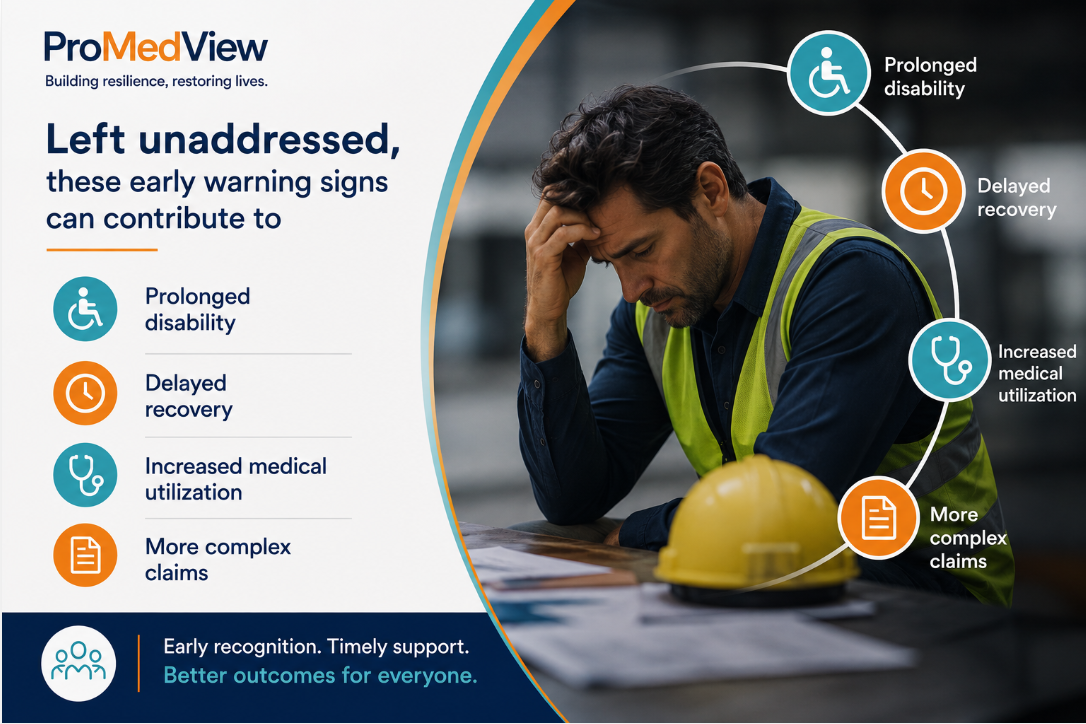
Left unaddressed, behavioral and psychosocial barriers can become increasingly intertwined with the physical injury.
An injured worker who fears movement may participate less fully in rehabilitation.
Someone who sleeps poorly may have greater difficulty regulating pain, mood, concentration, and energy.
An injured worker who becomes convinced that recovery is unlikely may become less confident about progressing toward normal activity or returning to work.
Persistent anxiety, trauma symptoms, depression, or catastrophic thinking may further complicate the recovery process.
Over time, what began as an uncomplicated physical injury can become a more complex interaction among physical symptoms, nervous-system responses, psychological distress, functional limitations, and environmental stressors.
That complexity can contribute to:
Prolonged disability
Delayed functional recovery
Difficulty progressing through rehabilitation
Increased healthcare utilization
Delayed return to work
Greater claim complexity
This is the central principle of the biopsychosocial model: biology, psychology, and the individual's environment and support system do not operate independently during recovery.
They continuously influence one another.
Early Identification Does Not Mean Everyone Needs Psychotherapy
Recognizing behavioral health risk does not mean referring every injured worker for intensive psychological treatment.
That approach can be just as inappropriate as waiting until every problem becomes severe.
The better question is:
What does this injured worker need at this point in recovery?
One person may need education and reassurance.
Another may benefit from brief supportive intervention addressing fear, sleep, coping, or adjustment.
Someone experiencing trauma symptoms may require trauma-focused treatment.
An injured worker with significant psychiatric symptoms may need psychiatric evaluation or medication management.
And some injured workers will not require behavioral health intervention at all.
The goal is early identification followed by clinically appropriate matching of the intervention to the individual's needs.
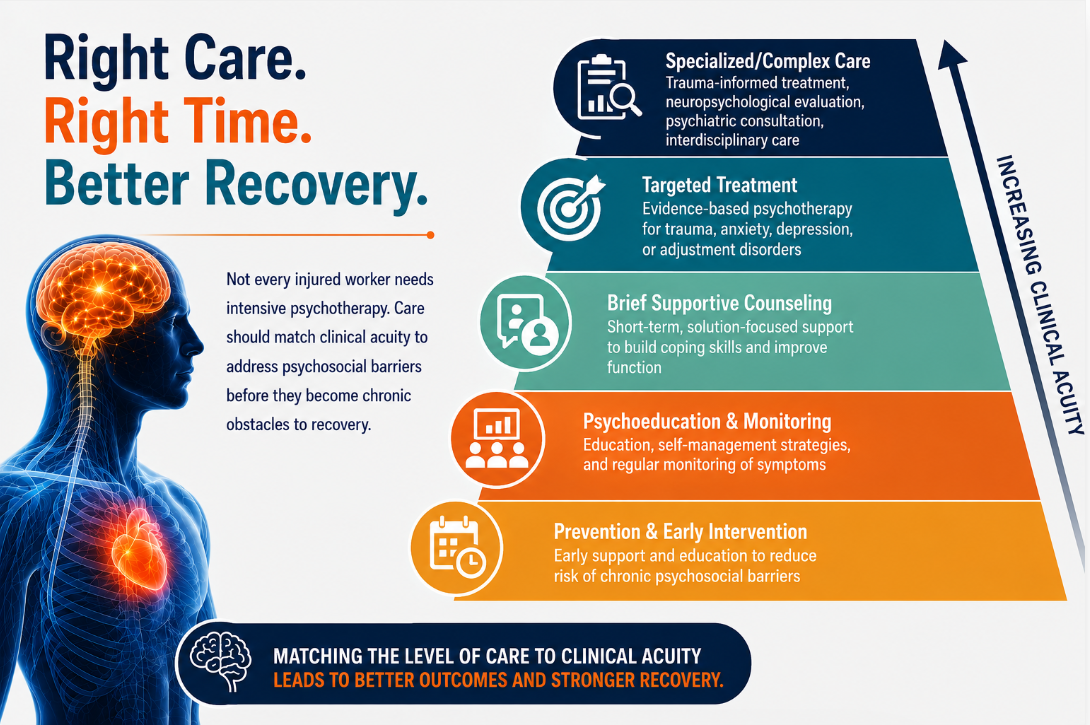
The Right Level of Care at the Right Time
Timing matters, but so does treatment intensity.
Effective behavioral health integration should not automatically mean more treatment. It should mean the appropriate treatment, delivered when clinically indicated.
This distinction is particularly important in Workers’ Compensation.
Research examining return-to-work interventions for mental health conditions demonstrates that outcomes depend on the type and context of the intervention. A 2023 systematic review and meta-analysis of 28 studies found considerable variation across return-to-work approaches, with multi-domain and health-focused interventions among the approaches showing the strongest return-to-work results in the studies reviewed.
A separate systematic review of workplace interventions found evidence supporting approaches that coordinate multiple components of recovery for workers with musculoskeletal, pain-related, and mental health conditions.
The implication is important:
Behavioral health should not exist in a silo from the rest of the claim.
When clinically indicated, it should support the larger goals of medical recovery, function, participation, and safe return to work.
From Reactive Care to Proactive Recovery Management
Traditionally, behavioral health may not enter a Workers’ Compensation claim until something has gone noticeably wrong.
The injured worker stops progressing.
Return to work fails.
Pain becomes persistent.
Treatment participation declines.
Trauma symptoms intensify.
The claim becomes increasingly complex.
At that point, behavioral health treatment may still be highly valuable, but an earlier opportunity may have been missed.
A proactive approach asks a different question:
Can we identify emerging recovery barriers before they become entrenched?
This does not mean predicting that every warning sign will lead to chronic disability. It means recognizing patterns that warrant attention and responding proportionately.
Early identification allows the care team to distinguish between a normal, temporary response to injury and a developing barrier that may require additional support.
Behavioral Health Is Part of Recovery
Physical and psychological recovery cannot always be separated into independent processes.
The nervous system connects them.
Pain affects emotion. Emotion can affect pain.
Sleep influences cognition, stress regulation, and physical functioning.
Fear can influence movement.
Expectations can influence participation.
Trauma can influence physiological arousal and perceived safety.
Support and environment can influence resilience and engagement.
This is why behavioral health should not be viewed only as a service introduced after a psychiatric diagnosis or after a claim has stalled.
When clinically indicated, it can be part of a comprehensive strategy for restoring function.
At ProMedView, we believe behavioral health should be integrated proactively and matched to clinical need rather than introduced only after recovery has become complicated.
The right intervention at the right time can change the trajectory of a claim.
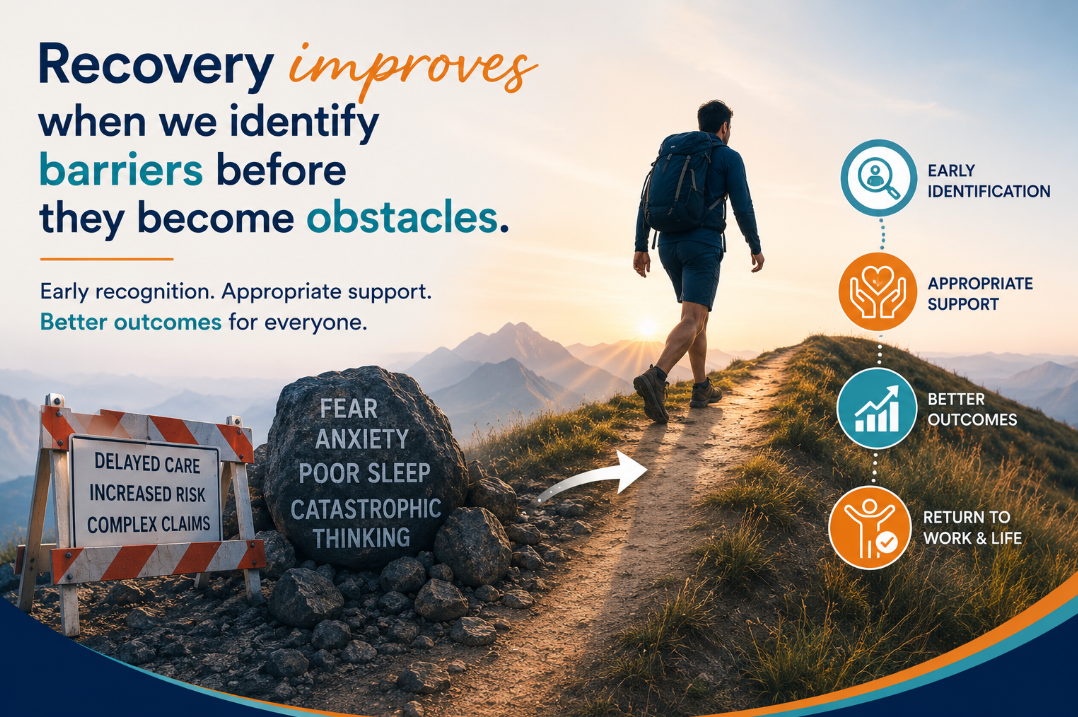
Recovery improves when we identify barriers before they become obstacles.
Scientific Resources & Further Reading
American College of Occupational and Environmental Medicine (ACOEM).Work Disability Prevention and Management Guideline. 2025. Provides an evidence-based framework for preventing and mitigating work disability and supporting stay-at-work and return-to-work outcomes.
American College of Occupational and Environmental Medicine (ACOEM).General Approach to Initial Assessment and Documentation. 2026. Reviews factors associated with disability risk, including self-efficacy, return-to-work expectations, fear of reinjury, psychosocial factors, support, and psychiatric conditions.
Besen E, et al.Recovery expectations can be assessed with single-item measures: findings of a systematic review and meta-analysis on the role of recovery expectations on return-to-work outcomes after musculoskeletal pain conditions. The review included 30 studies and 28,741 participants and found substantially greater odds of work disability among people with low recovery expectations.
Runge N, et al.The bidirectional relationship between sleep problems and chronic musculoskeletal pain: a systematic review with meta-analysis.Pain. 2024;165(11):2455–2467. Examines evidence that sleep disturbance and musculoskeletal pain can influence one another.
Nowrouzi-Kia B, et al.Evaluating the Effectiveness of Return-to-Work Interventions for Individuals with Work-Related Mental Health Conditions: A Systematic Review and Meta-Analysis.Healthcare. 2023;11(10):1403. Reviews 28 studies examining return-to-work interventions for work-related mental health conditions.
Cullen KL, et al.Effectiveness of Workplace Interventions in Return-to-Work for Musculoskeletal, Pain-Related and Mental Health Conditions: An Update of the Evidence and Messages for Practitioners.Journal of Occupational Rehabilitation. 2018;28(1):1–15. Reviews workplace-based return-to-work and disability-management interventions.
U.S. Department of Veterans Affairs/Department of Defense.Clinical Practice Guideline for the Diagnosis and Treatment of Low Back Pain. The guideline incorporates the biopsychosocial model and considers mental health conditions, pain catastrophizing, psychosocial stressors, and behavioral interventions within pain management.
#WorkersCompensation #BehavioralHealth #ClaimsManagement #ReturnToWork #OccupationalHealth #CaseManagement #TraumaRecovery